
Photo by: American Eagle
Every year, classic brands like American Eagle and GAP search for new ways to boost sales, often by partnering with celebrities to make their clothing more appealing or to launch new product lines. In recent years, however, these campaigns have aimed for more than just selling stylish clothes — they’ve tried to project a message of inclusivity, positioning themselves as brands that welcome people of all body types, races, and ethnicities. Yet, not all attempts succeed. This summer, two viral ads revealed how differently campaigns can be received when it comes to inclusivity and representation.
On July 23, 2025, American Eagle released a collaboration with Sydney Sweeney, an actress known for her stereotypical “blonde bimbo” persona. The campaign centers on Sweeney posing in denim and speaking in a vaguely seductive tone, but with little substance to the message. The slogan, “Sydney Sweeney has great jeans,” was intended as a play on words between jeans and genes. Instead, it sparked backlash. Many found it tone-deaf, pointing out that choosing a white, blonde, blue-eyed woman to deliver a pun about “genes” risked evoking undertones of eugenics and racial exclusivity. Far from boosting sales, the campaign left audiences feeling alienated and uninspired, with some even boycotting the brand. Defenders argued that focusing on a single celebrity still counts as representation — but critics countered that in 2025, relying on outdated tropes of beauty feels like a step backward.
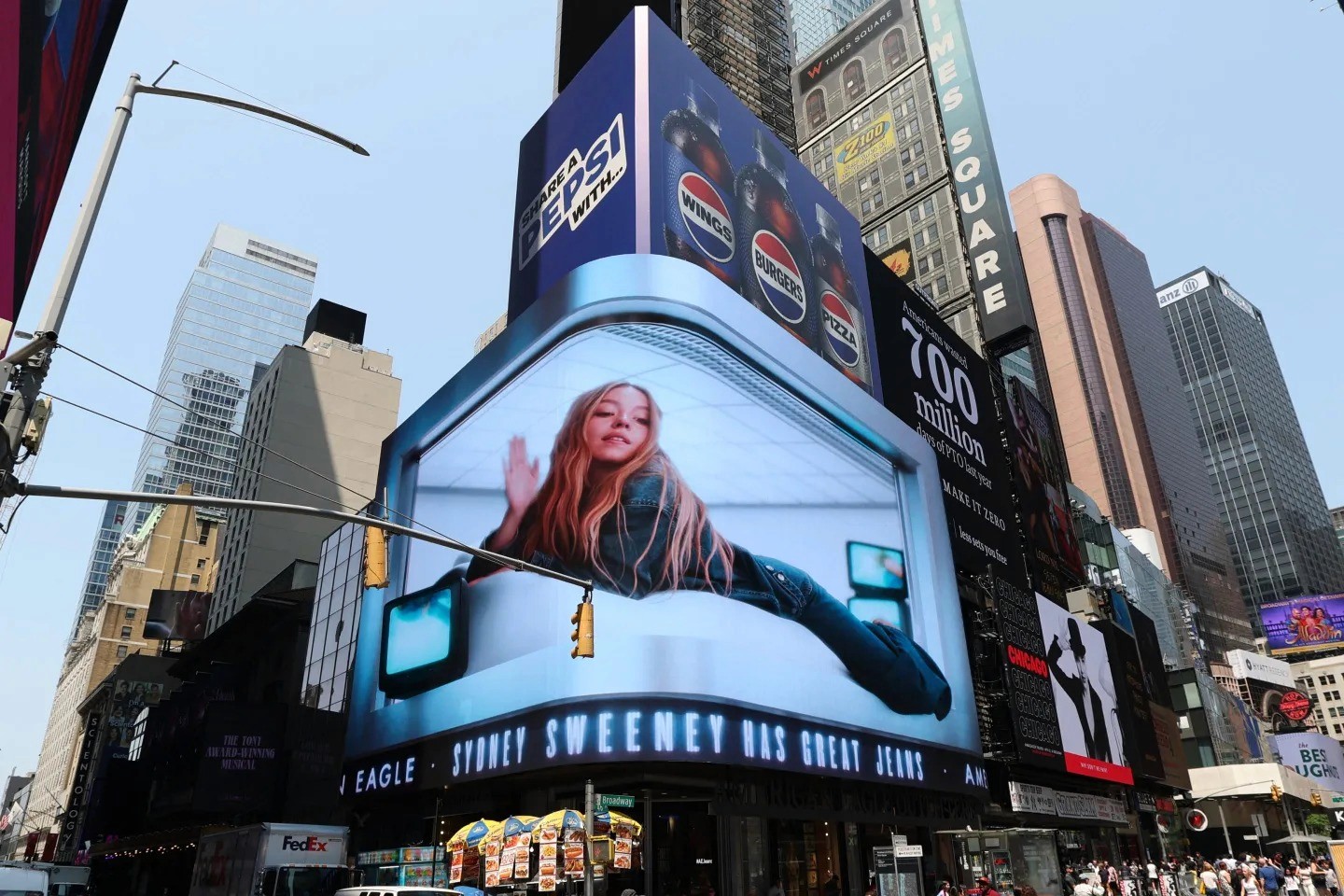
Photo by: TIMOTHY A. CLARY—AFP/Getty Images
In contrast, just weeks later, GAP released its collaboration with global girl group Katseye, under the slogan “Better in Denim.” Unlike American Eagle’s ad, GAP leaned into Katseye’s reputation for diversity and relatability. The campaign features a vibrant dance performance where each of the six members — who represent a range of races and backgrounds — showcases their individuality through both movement and fashion. By giving each member a moment to shine, the ad conveys a message of self-expression and inclusivity that resonates deeply with fans. Rather than selling a single image of beauty, GAP sells the idea that their clothes can be adapted to anyone’s style and identity. The result was overwhelmingly positive, with audiences praising the campaign for both its artistry and its authenticity.
Comparing the two ads highlights not only a stark difference in execution but also in public reception. Both campaigns went viral, but for opposite reasons: one sparked controversy, the other admiration. Together, they reflect the evolving expectations placed on brands in today’s market. As society continues to redefine its standards of what is “good,” brands must keep reinventing themselves to remain relevant. Advertising is no longer just about showcasing a product—it is about shaping cultural narratives and setting new benchmarks. Those that embrace inclusivity and authenticity expand their reach, strengthen consumer trust, and transform their marketing into something greater than a sales pitch. In this way, advertising becomes not just a survival strategy, but a powerful force for shaping culture and ensuring long-term relevance.

Valeria Hernandez
Junior writer
Hi, I’m Vale! I’m a junior at La Floresta and an editor and writer for The Daily LF. Writing has always been my favorite way to explore the world—it lets me dive into different perspectives, cultures, and stories that shape how we understand one another. I love leaving a piece of myself in everything I write and hope my voice stands out through my words. More than anything, I want my writing to spark thought, emotion, and connection. I’m so excited to keep growing, learning, and sharing my passion with all of you!


