Photo by: NASA
The moon has always seemed out of reach to humans, but that hasn't stopped us from feeling an overwhelming curiosity to explore it, and for years we have been dedicated to reaching it. From the creation of NASA in 1958 to the historic moment of Apollo 11 in 1969, when we reached and set foot on the moon for the first time, as Neil Armstrong said, “That's one small step for a man, one giant leap for mankind”. The very act of being on the moon was a huge leap forward for us. And today, with the successful Artemis II mission, we are well on our way to repeating history after nearly 50 years; but it seems that many people don’t understand the magnitude of this—that the simple fact of having managed to leave orbit and return safely is impressive enough by itself; taking in count how many failed missions had ended in tragedy, even more so given everything this mission managed to bring back. So, stick around to learn why you, too, should be excited to be so close to the stars again.
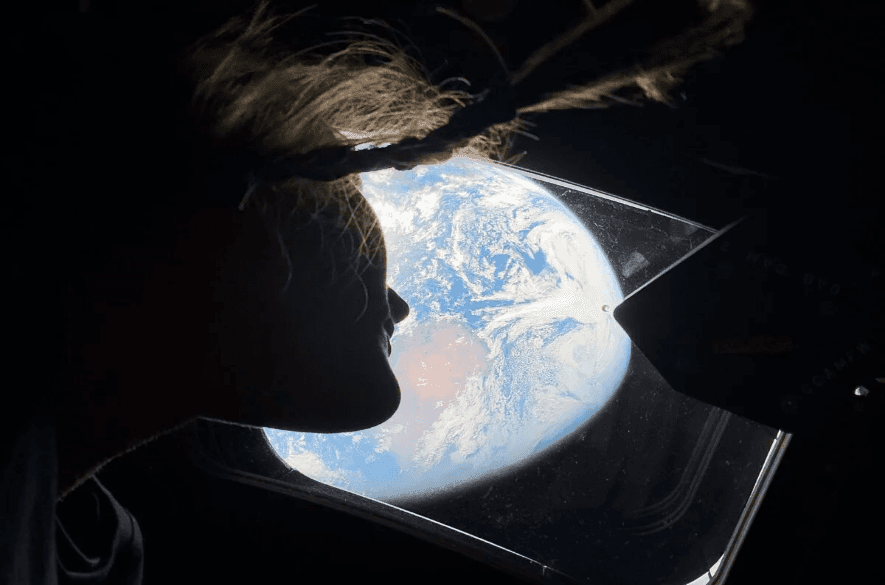
Photo by: NASA (ChristianKosh. View from Earth from Orion, at this moment Christina was already farther than any woman has ever been from Earth)
The Artemis II mission was successfully launched on April 1, leaving Earth without a hitch. The mission had a crew of four: Reid Wiseman, Victor Glover, Jeremy Hansen, and Christina Koch, who became the first woman to travel beyond Earth’s orbit, making history not only in the scientific field with her enormous contribution to exploration, but also in the history of women by paving the way for many others who dream of becoming astronauts. For me, the fact that the mission was named after a Greek goddess adds a lot of symbolism to this event, and seeing the image of Christina looking at Earth from so far away is something we should all appreciate.
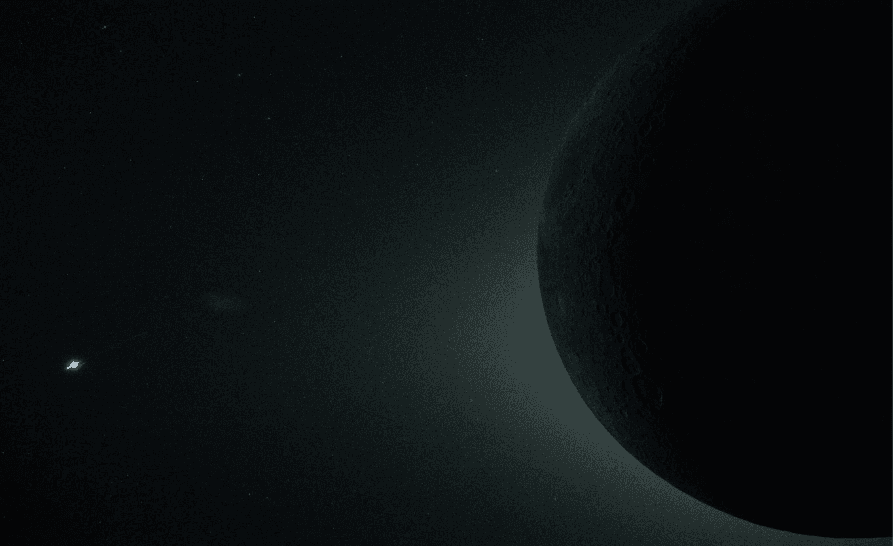
Photo by: NASA (Artemis captures a full solar eclipse as the faint silver glint is Venus)
What many people wondered about this mission was what the true objective was, since the exploration did not land on the Moon; and the answer is much simpler and more logical than expected, since we must take into account that nearly 50 years have passed since humans were so far from Earth. It would not be prudent to send an exploration mission directly to the Moon without extensive prior testing, especially given tragedies like the Challenger disaster. One can never be too cautious when working with something as unpredictable as space.
So the real goal of Artemis II was to test the effectiveness of the Orion capsule and ensure human safety when traveling such a great distances from Earth, thing that they definitely achived since Artemis II is officially the human space mission that has traveled the farthest from Earth in history, narrowly surpassing Apollo 13—though by only a few kilometers. If we put these distances into perspective, it simply means that human technology is gradually getting closer to reaching further space exploration step by step. Just thinking about all the things, we will one day achieve is incredible.
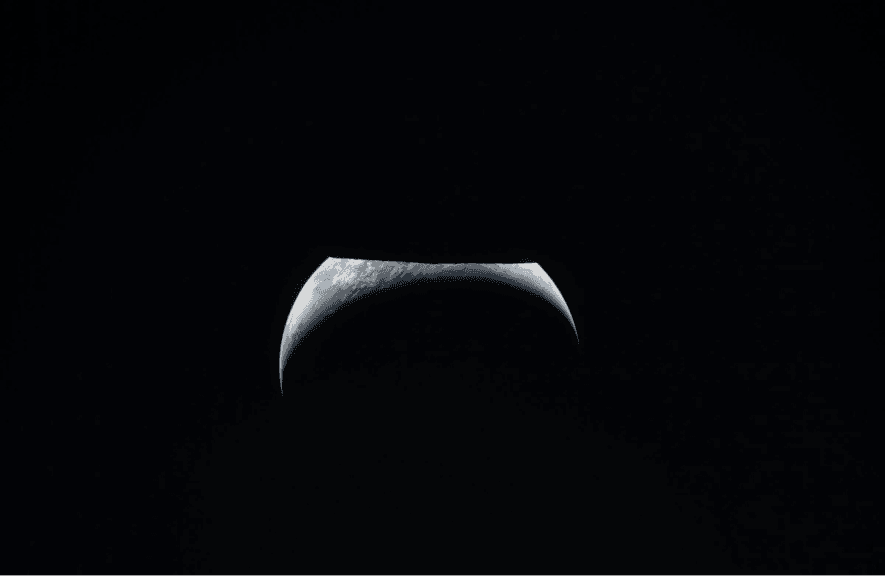
Photo by: NASA (Cresent Earth view as Artemis orbits behind the moon)
But that wasn’t the only achievement. You could say that Artemis practically orbited the moon, tracing a perfect loop around it. This meant something never seen by the human eye in person: the dark side of the moon, the side that can’t be seen from Earth. The crew had to pass through that area, and for me, it was one of the tensest moments, since all communication with Earth was completely lost during the long 40 minutes they spent there.
Can you imagine being without communication on the darkest and farthest side humanity has ever reached? Although it’s terrifying to think of all the things that could have gone wrong, I must say that this tense moment resulted in what is perhaps my favorite photo from the entire mission: the moment when perspectives shift. To give a bit of context, the reason we see the moon as a crescent is because of its spherical shape—only portions of it are illuminated by the sun, and as it moves, we only get to see certain phases of it. But from the perspective of the dark side of the moon opposite to Earth, these phases are reflected on Earth due to the new angle from which the illumination is perceived, creating the ridge seen in the image—but now on Earth. Isn’t that cool?
The contributions this mission has made are enormous, and I could spend hours talking about it—from its incredible crew, who remained active even from space so that everyone could share in the experience, to just how impressive it is to think about all the work behind this launch. I don’t think anyone can truly grasp the immense calculations that had to be made to chart a course that would orbit the moon, which is at constant motion—it simply blows my mind every time I see the spacecraft trajectory. Thanks to this very precision, the crew managed to return to Earth safe and sound on April 10, officially marking their mission as complete. This event holds great promise for the future, as it is the key to launching the third mission, Artemis III, which is just one more step toward conquering what always seems just out of our reach. Watching this entire journey live as someone deeply passionate about space was a once-in-a-lifetime experience for me, and I hope that reading about humanity’s progress—as we follow the curiosity that has driven us to reach for the stars—brought you the same excitement. And to our readers: as Victor Glover said before losing all communication from behind the moon: “To all of you down there on Earth and around Earth—we love you from the moon.”

Ariela Pineda
Junior writer
Hi, I’m Ariela. I’m a junior at La Floresta and a writer for the school newsletter team. I believe that writing is a unique way for me to express myself to the public, and I find that it makes it easier to communicate something meaningful and interesting at the same time. Being part of the team opens many doors for me to explore different topics where I can grow creatively, both individually and as part of a group. I hope to continue learning and developing through this opportunity, and to share my knowledge and interests with the world in my own personal style.